Flood Damage Restoration: Unlocking Swift, Smart Recovery
Beyond the Deluge: How Future Tech Will Reshape Our Battle Against Water Damage
We stand at a fascinating precipice, don't we? For centuries, humanity has waged a tireless, often losing battle against the raw, unyielding power of water. A burst pipe, a relentless storm, a flash flood – and suddenly, our homes, our livelihoods, our very sense of security are submerged. The aftermath is a familiar, heartbreaking scene: sodden carpets, warped wood, the insidious creep of mold, and the daunting, often months-long process of what we currently call "water damage restoration." It’s a reactive, exhausting, and incredibly expensive dance we do with nature, but I’m here to tell you, it doesn’t have to be this way forever.
The Inevitable Tide: A Challenge Redefined
Think about it: right now, the process of recovering from water damage feels almost medieval. We bring in industrial fans, dehumidifiers, tear out ruined materials, and meticulously dry out structures. It’s effective, yes, but it's slow, labor-intensive, and fundamentally reactive. We wait for the disaster to strike, then we scramble. We search for "flood damage restoration near me" in a panic, hoping for a quick fix, but the damage is already done, the clock already ticking, and the potential for long-term issues like structural compromise or hidden mold growth is a constant, nagging worry. This isn't just about cleaning up a mess; it's about reclaiming a space, a piece of our lives, from an elemental force that moves with terrifying speed and stealth.
But what if we could rewrite that script? What if the future of water damage restoration wasn't just about cleaning up, but about predicting, preventing, and performing precision recovery with an efficiency we can only dream of today? This isn't science fiction; it’s the inevitable convergence of technologies already humming in our labs and factories. The idea that we're still largely beholden to manual labor and traditional drying methods for something as pervasive as flood damage feels, to me, like trying to cure a complex disease with leeches. We need a paradigm shift, a leap forward, and that's exactly what I see on the horizon.
Tomorrow's Tools: AI, Robotics, and the Unseen Front Line
Imagine this: a future where your home isn't just a collection of walls and furniture, but a smart, sentient entity. We're talking about integrated sensor networks that don't just detect a leak, but predict one. Advanced AI models, fed by meteorological data, local infrastructure vulnerabilities, and even historical flood patterns, could give us hyper-localized warnings days, even weeks, in advance. This isn’t just a weather alert; this is a personalized flood forecast for your specific property, allowing proactive measures to be taken long before the first drop of unexpected water even hits. This is the kind of breakthrough that reminds me why I got into this field in the first place, seeing how technology can fundamentally change our relationship with our environment.
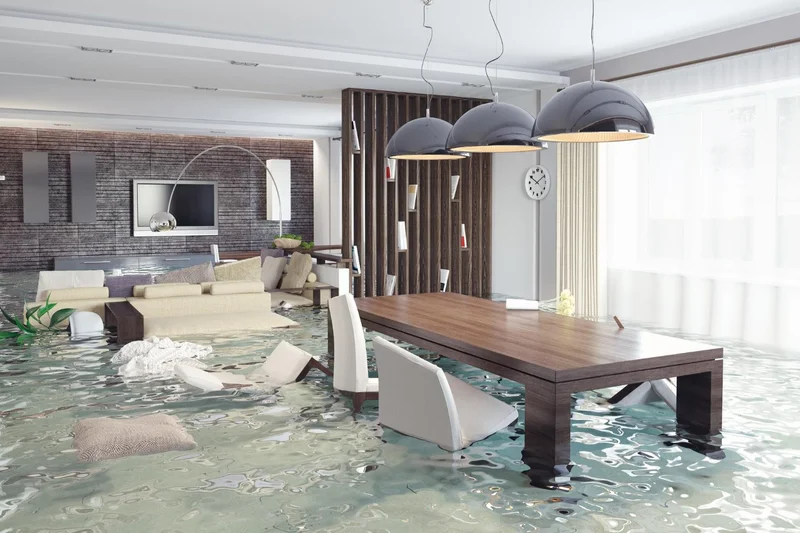
And when prevention isn't enough – because let's be honest, nature always finds a way – the recovery process will be unrecognizable. Picture swarms of autonomous drones and robotic units, equipped with hyperspectral cameras and moisture-sensing arrays, entering a compromised structure minutes after the water recedes, or even while it's still present. These aren't clunky, human-operated machines; these are agile, intelligent systems capable of mapping damage in 3D, identifying every pocket of moisture, every compromised material, with an accuracy and speed no human crew could ever match. They could begin targeted drying, air purification, and even initial debris removal, acting as an immediate, tireless flood water damage restoration service.
Think of the sheer efficiency! No more guessing games about hidden moisture behind walls. These robots could pinpoint the exact areas needing attention, even deploying microbial agents to prevent mold growth before it even has a chance to take hold. This will make the current search for a "flood damage restoration service" or "flood damage restoration San Diego" a call not for manual labor, but for a highly specialized, AI-driven rapid response team. It's like comparing a horse-drawn carriage to a self-driving electric vehicle – the fundamental purpose is the same, but the means of achieving it are light-years apart. The speed of this is just staggering—it means the gap between today and tomorrow is closing faster than we can even comprehend, transforming reactive cleanup into a streamlined, almost surgical recovery mission, minimizing secondary damage and slashing recovery times from months to mere days, perhaps even hours.
Of course, with great power comes great responsibility. We need to consider the ethical implications: what happens to the human jobs in water damage restoration? How do we ensure equitable access to these advanced technologies, so that communities in Austin or anywhere else, regardless of their economic standing, can benefit? These are not trivial questions, and they demand our attention as we build this future. But the potential to mitigate suffering and rebuild lives faster, more completely, and more sustainably, is a powerful motivator. I've seen discussions on forums like Reddit, where people, often after experiencing devastating floods, are already clamoring for innovations, envisioning a future where "water damage restoration" is less a nightmare and more a highly efficient, almost invisible process. They're not asking if it's possible, but when.
A Future Where Water Doesn't Win
This isn't about eliminating floods; it's about neutralizing their power to devastate. It's about moving from a state of constant vulnerability to one of resilience, where technology becomes our most steadfast ally against the elements. We're talking about a future where "flood damage restoration" is less a heroic struggle and more a precise, predictable operation.
The Deluge Doesn't Stand a Chance.
Related Articles

Cross-Border: What's the Challenge?
The dreaded blank screen. We've all been there. You click a link, expecting information, analysis, m...

China's Deflationary Shockwave: The Hidden Opportunity for a Tech Revolution
Generated Title: The Coming Age of Clarity: Why Our Digital Chaos Is About to End Have you ever felt...

Firo: The 'Water FOMO' Hype and What They're Not Telling You
Koeman's Sudden Revelation: Or, How to Spin a U-Turn Like a Pro Alright, let's talk about Ronald Koe...

Firo Launches in Chennai: So What?
Firo in Chennai: Just Another Shiny Distraction? Velveteen Rabbit is dead. Okay, fine. Another one b...

Intuition: Jessica Simpson and the Sound of Silence
Okay, so Jessica Simpson is eight years sober. Big deal. We're supposed to applaud, right? Cue the v...

johannesburg: what happened and what we know
Alright, folks, buckle up, because this story out of Hillbrow isn't just about a crime and a sentenc...